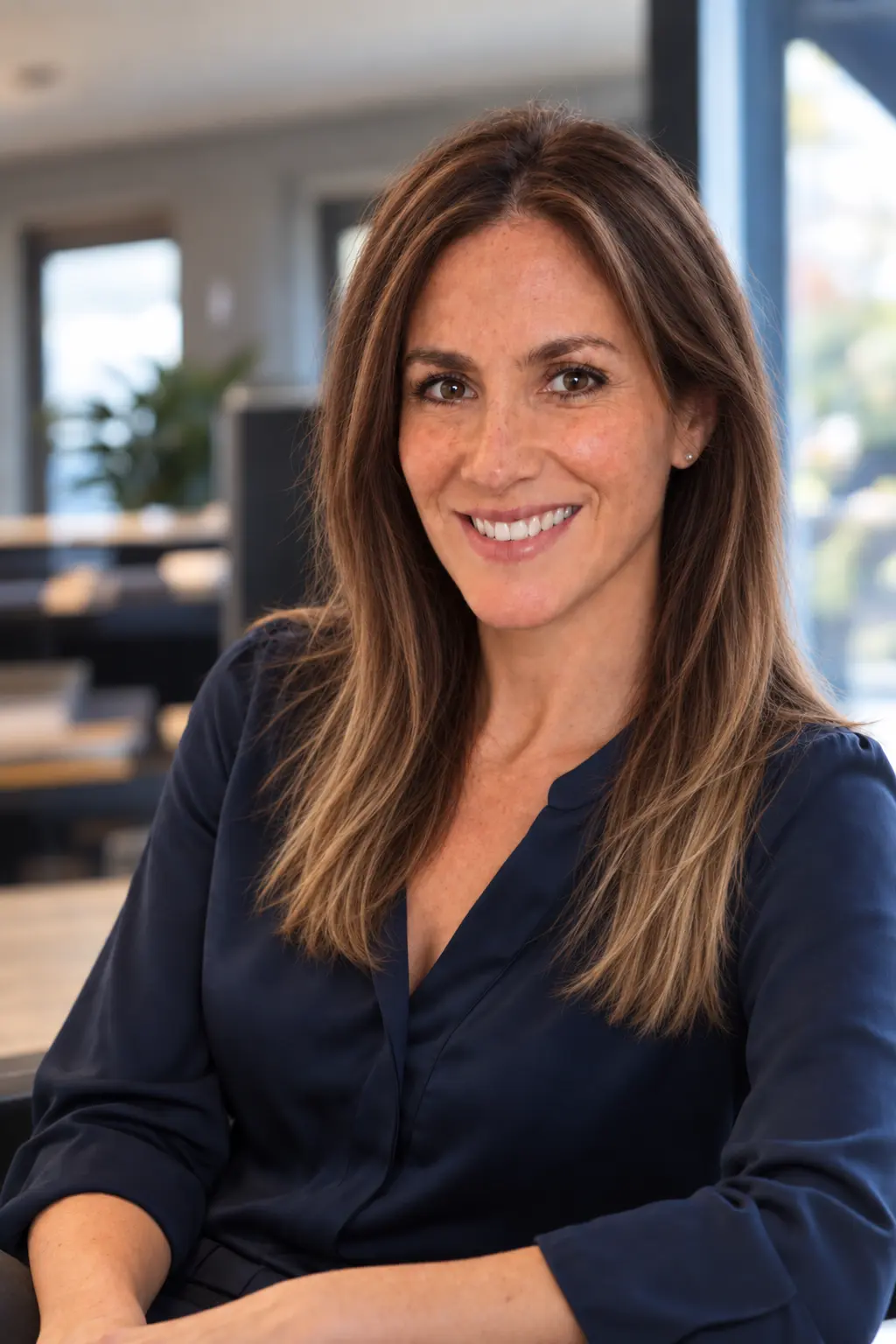
Christianna HamiltonWhole-business judgement, earned from the ground up.
I founded Athletic Edge, a multidisciplinary sports medicine and performance business built around a simple conviction: athletes should not be treated as interchangeable. Without outside funding, I grew it from one person to a team of 65. We worked with teams and individuals across Formula One, the NFL, NBA, MLB, Olympic programmes and international rugby. I sold the company ten years later.
I identified the opportunity, built the brand and commercial proposition, won the clients and created the organisation required to deliver. That experience lets me see a business whole: where value can be created, what growth requires and what must not be traded away.
Where I create leverage
Where I create value now.
I am most useful when an organisation needs both imagination and discipline: to recognise an opportunity, shape the proposition, build the organisation behind it or make a decision whose consequences cross functions.
An opportunity has not yet become a business
A market need, capability, audience, brand or relationship needs a proposition, commercial model and route to delivery.
Growth has outpaced the organisation
The proposition works, but decision rights, incentives, capacity or leadership structure no longer fit the next stage.
The important decision crosses functions
Strategy, commercial value, people, execution and risk point in different directions, with no single function able to see the whole.
See how I decide when the answer crosses functions
Six illustrative organisations. Six decisions in which the commercially attractive, operationally possible and organisationally responsible answers do not automatically agree. Choose a situation, apply a pressure and follow the consequences across the organisation.
Live-entertainment company
Funding the present without selling the future
Is the company selling partnership inventory, forming a technology relationship, or transferring ownership of a future business it has not yet built?
Apply a pressure. The consequences are calculated, in order, across every function the decision touches.
The sector changes. The reasoning does not.
The scenarios move beyond sport because the discipline transfers. It was formed through the responsibility of building and leading a company, and through years of work around elite performance, where specialists must make connected decisions, preparation is visible and small errors compound.
AI is used here to widen the search, test assumptions and prepare options. It does not own the decision; judgement, authority and accountability remain human.
Calculated
Arithmetic and thresholds come from tested code. The same inputs always give the same answer.
Contested
Each function argues its position in a fixed structure. A critic looks for conflict, double counting and unsupported certainty. Disagreement is kept.
Signed
The decision belongs to a person. It states what was rejected, what it depends on and what would change it.
Opportunity Studio
Turning possibility into a commercial proposition.
An independent concept study in opportunity identification, partnership architecture, commercial model design, brand stewardship and governance under uncertainty.
It asks what might become possible if Apple’s Formula One platform were informed by Mercedes’ expertise, then designed to scale beyond one team. Choose the commercial objective, change a market condition and see the partnership reconstruct around it.
What ten years of responsibility required
Ten years of responsibility for the whole result meant creating demand, allocating capital, building the organisation, navigating growth and recognising when the model needed to change. I sold the company in 2019.
- 2009 to 2019
- Founder and chief executive
- 1 to 65
- People, built from a standing start
- 3 offices
- In Palo Alto, with work across the US, Monaco and Australia
- 2019
- Company sold
Thinking
- EssayHow Ownership Quietly DisappearsAs organisations grow, decisions often attract more participants while responsibility for the outcome becomes harder to locate.
- EssayThe Product Has Changed JobsThe visible product may remain essential even as the larger commercial opportunity moves to the system growing around it.
- EssayAfter the Product Is Good EnoughOnce the core product works, durable advantage often comes from capabilities that increase the value of everything around it.
Where could this create value in your organisation?
If you are building something new, working through growth or facing a decision that crosses functions, I would be glad to hear what is in front of you.